
The MV Panagiotis shipwreck is the reason Navagio Beach is known around the world. Today, the rusted hull sits in white sand, framed by steep cliffs and bright blue water. However, the story behind it is not just visual. It combines real maritime history with local legend.
As a result, many visitors know the beach as “Smugglers Cove”. Yet, the truth is more complex than the nickname suggests.
Origins of the MV Panagiotis
Before it became famous, the MV Panagiotis had a long and ordinary working life. It was not built for smuggling. Instead, it began as a small coastal cargo ship. The vessel was built in 1937 in Scotland and was originally named MV Saint Bedan. At that time, it operated as a typical “coaster”, designed for short-distance trade routes along coastlines. It measured about 48 meters (157 feet) in length, which was standard for ships of this type.
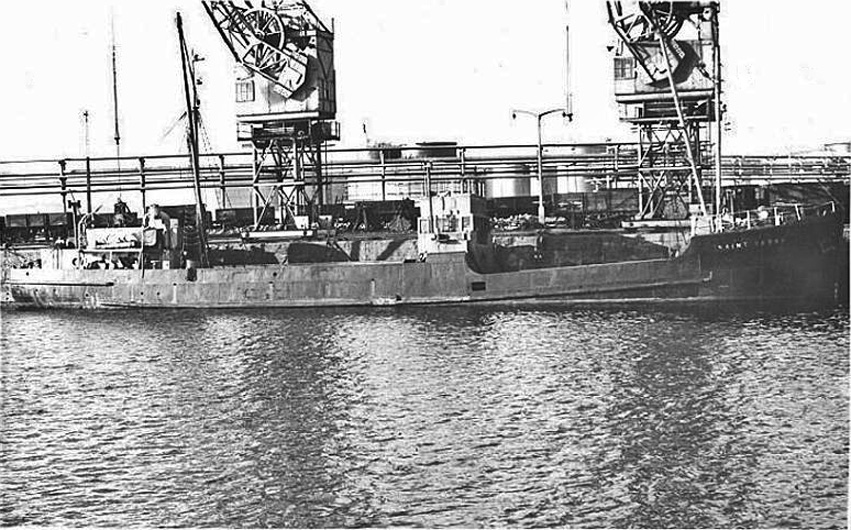
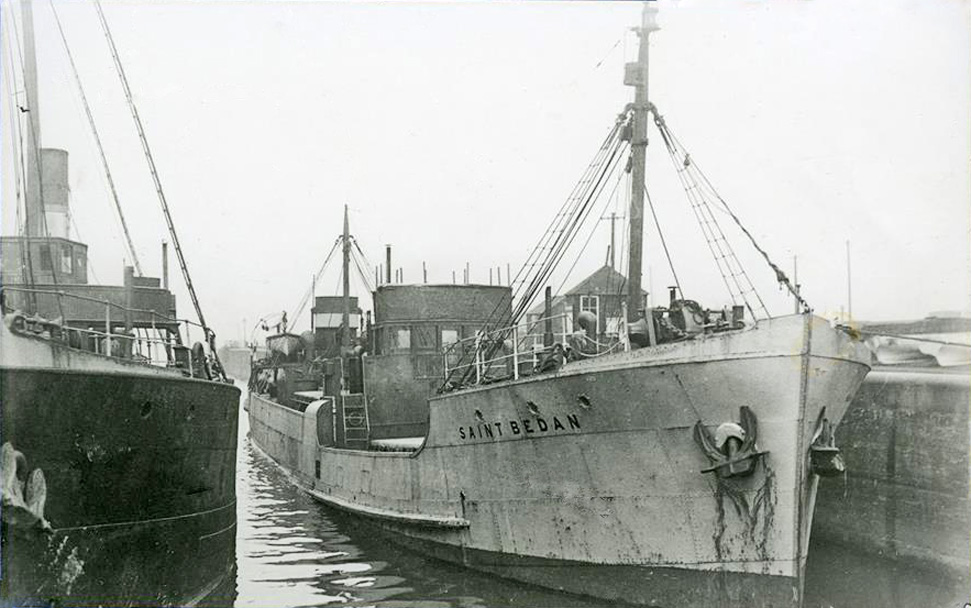
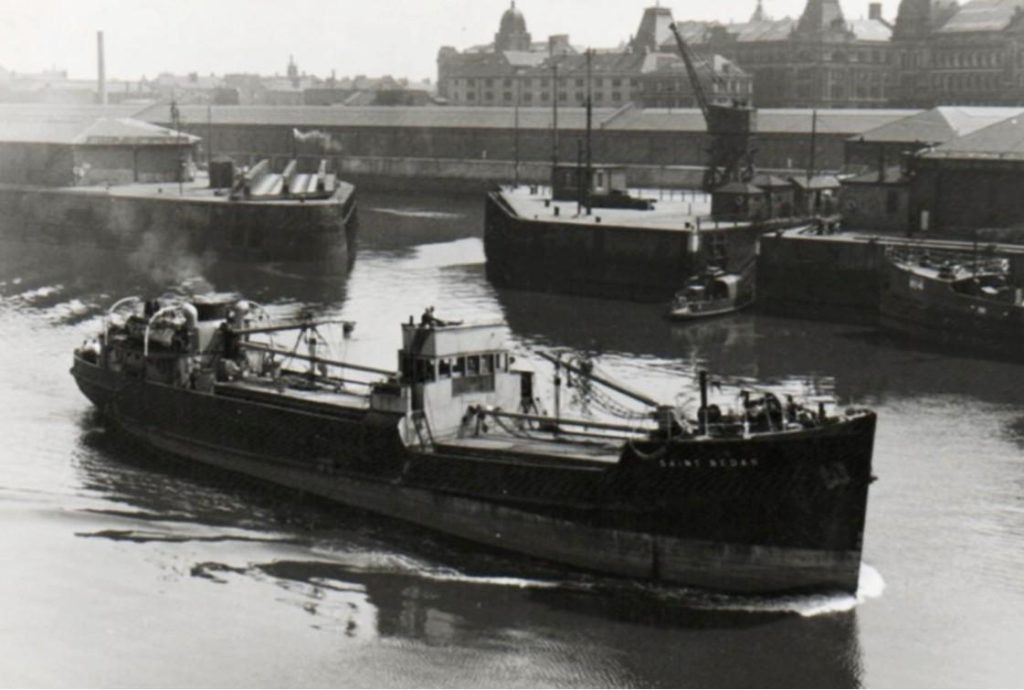
First, the ship worked across European waters, transporting goods under normal commercial operations. Then, over the years, it changed ownership several times. As a result, its name also changed. It became Meropi in 1964, and later Charis in 1966. Finally, in 1975, it was renamed MV Panagiotis after being acquired by a Greek company based in Piraeus.
By that stage, the vessel was already several decades old. Therefore, its age likely affected both its condition and performance. Meanwhile, older ships often require more maintenance, which can increase the risk of mechanical issues. This detail becomes important when looking at what happened later.
What Happened in October 1980
The most important part of the story happened in early October 1980. Most sources point to October 2, although exact details still vary.
The Smuggling Story
According to the most widely accepted version, the ship carried illegal cargo. This included thousands of cartons of cigarettes, alcohol products, foods reportedly linked to organized smuggling networks.
Because of this, Greek authorities allegedly began tracking the vessel. Then, during its journey across the Ionian Sea, the situation escalated.
The Chase and Shipwreck
During the night, weather conditions were poor. Winds were strong, and visibility was low. As a result, navigation became difficult.
At the same time, reports suggest the ship tried to avoid interception. However, during this attempt, it suffered mechanical failure.
Then, without control, the vessel drifted toward the coast. Finally, it ran aground in a hidden cove known at the time as Agios Georgios.
Why the Crew Abandoned the Ship
Once the ship hit the shore, the situation changed quickly. The crew faced both legal risk and harsh conditions.
Therefore, they made a fast decision. They abandoned the ship, left the cargo behind and escaped the area to avoid arrest.
Meanwhile, the ship remained stuck in the sand. Because the cove had no road access, removal was not simple. As a result, the wreck stayed where it landed.
The Aftermath and Local Legends
After the wreck, the story took a different turn. This is where history and local legend begin to mix.
Soon after the ship ran aground, locals reportedly reached the beach. Then, they began collecting the cargo.
According to popular stories boxes of cigarettes were taken from the wreck. Many locals smoked them for years. The term “Navagio cigarettes” became part of local culture.
However, these details are hard to fully verify. Even so, the story remains widely shared on the island.
Legal Consequences
At the same time, authorities continued their investigation. Eventually the captain and crew were identified and several were arrested. Convictions followed for smuggling-related charges.
Because of this, the shipwreck became linked not just to legend, but also to real legal events.
Before the shipwreck, the beach had a different identity. It was known as Agios Georgios.
However, after 1980, everything changed. The Greek word “navagio” means “shipwreck”. Therefore, the location was renamed based on the event.
As a result Agios Georgios became Navagio Beach. The site gained global attention and tourism increased rapidly.
Today, the shipwreck is the defining feature of the beach.
Why the Ship Was Never Removed
One key question often comes up: why is the ship still there? The answer is practical.
First, the location is remote. There is no road access to the beach. Therefore, removing a large steel vessel would require complex logistics.
Second, the cost would be very high. Heavy equipment, transport planning, and environmental concerns all play a role.
Finally, the ship quickly became a tourist attraction. Because of this, there was little incentive to remove it.
As a result, the wreck was left in place and slowly became part of the landscape.
The Shipwreck Today: Condition and Changes
Today, the MV Panagiotis is no longer intact. Over time, natural forces have caused steady damage. Saltwater leads to corrosion, while strong winds weaken the structure. In addition, winter storms hit the exposed metal with force. As a result, parts of the ship have collapsed, and the remaining sections are thinner and less stable.
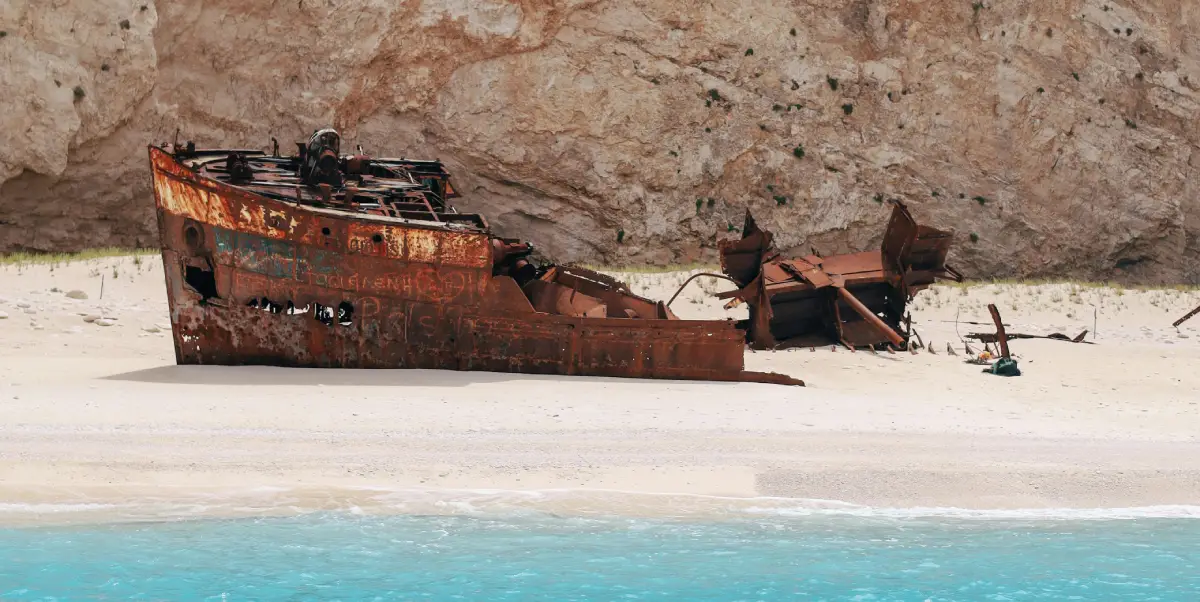
Because of this, safety is a key concern. Access rules can change depending on current conditions. In some cases, visitors are not allowed to approach the wreck closely. At other times, landing on the beach may be restricted. Meanwhile, authorities may fully close the area if there is a risk of further collapse. Therefore, it is important to check the latest access updates before planning a visit.
Why This Shipwreck Became World-Famous
Many beaches have shipwrecks. However, Navagio is different.
First, the setting is rare. The beach sits inside a closed cove with cliffs over 200 meters high. This creates a dramatic visual contrast.
Second, the water color is unusually bright. Fine white sand and limestone reflect sunlight, which enhances the turquoise tones.
Finally, the story adds emotional value. A mix of crime, escape, and mystery makes the site more memorable.
As a result, the MV Panagiotis is not just a wreck. It is part of a complete visual and cultural experience.